λ.01
DVI's second life is on fiber
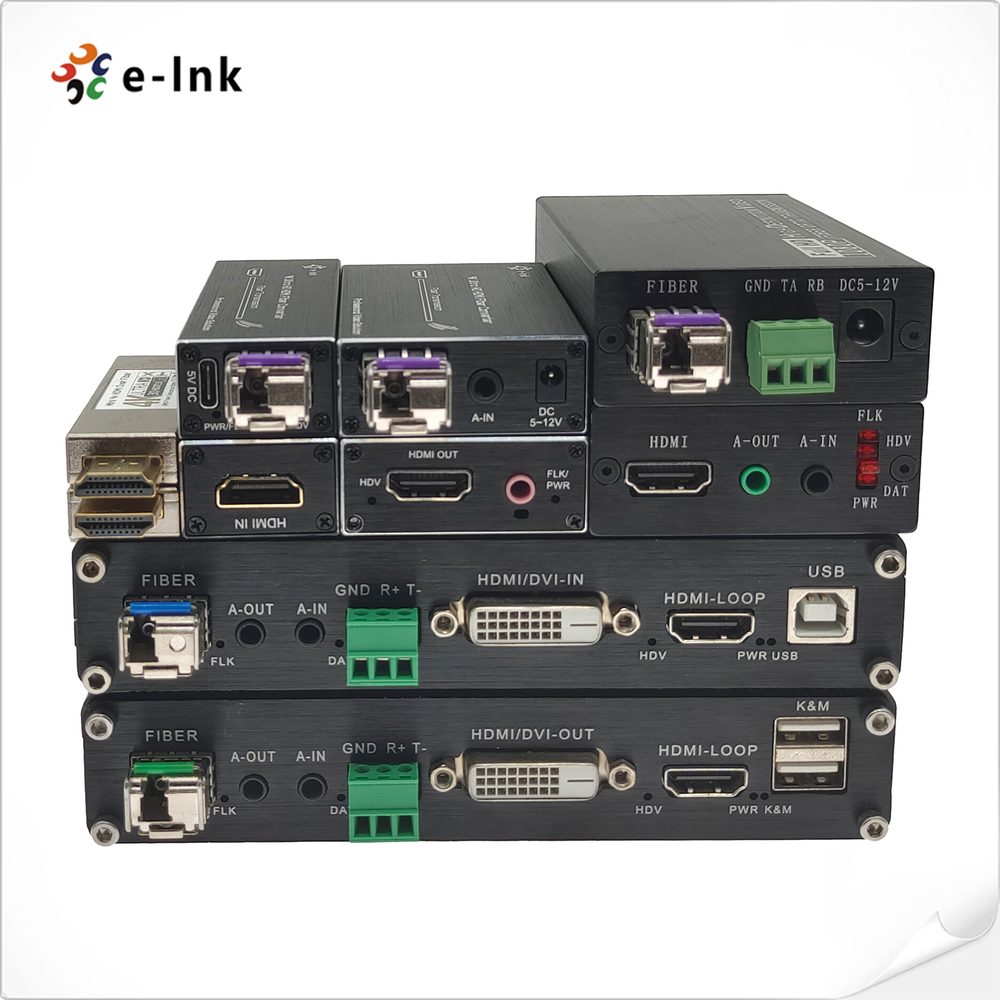
DVI was supposed to be retired by now. Instead it persists exactly where reliability matters: graphics workstations in control rooms, medical imaging, industrial HMIs, simulation and older high-end displays — equipment with long service lives whose video output is a DVI port. Those machines also tend to sit far from their displays, and DVI copper is even less forgiving than HDMI. This family converts DVI to fiber in both its generations: three 1080p models and two 4K models.
The documented details reward a look. The Mini 4K DVI Fiber Optic Extender carries RS232 beside the video — the serial channel that touch overlays and control systems need. The larger KVM-pattern units in the video range combine HDMI/DVI inputs with loop outputs and USB, so a workstation can be relocated to a machine room and operated from a quiet desk. VGA appears in this catalogue only as legacy demand: rather than inventing a VGA product line, this page treats VGA sources in the specifying section below.
| Model (official product name) | Series | Documentation |
|---|
| 1Ch 1080P Bidi DVI + 1Ch Bidi RS232 + 1Ch Bidi Stereo Audio + GPIO over Fiber Extender | LNK-B-DVI-1DA1GO | Specification captured from the official product page |
| DVI Fiber Optic Extender with 1Ch Bidirectional Stereo Audio + 1Ch RS232 | — | Full specification confirmed per model at quotation |
| Multi-functional 1080P DVI Fiber Optic Extender support KVM + RS232 + Bidi Stereo Audio + GPIO | — | Full specification confirmed per model at quotation |
| Mini 4K DVI Fiber Optic Extender with RS232 | LNK-MDR4K | Specification captured from the official product page |
| Mini 4K DVI Fiber Optic Extender with Stereo Audio | — | Full specification confirmed per model at quotation |
The 1080p DVI family (3 models) and 4K DVI family (2 models) combined, as listed in the manufacturer's catalogue.